
Your Nervous System Already Knows How to Reset (Here’s How to Support It)
Your body is not designed to stay stressed.
In fact, one of the most important systems in your body, the autonomic nervous system, is constantly working behind the scenes to bring you back into balance.
Stress rises. And then, ideally, it resolves.
This cycle is not only normal—it is essential for health.
The challenge today is that for many people, the “stress on” signal stays switched on far longer than the body was designed to handle.
Yoga offers a simple, evidence-informed way to support the body in finding its way back.

The science of your stress response
When you perceive stress, whether physical, emotional, or mental—your sympathetic nervous system activates. This triggers the familiar “fight or flight” response.
Your body releases stress hormones including cortisol and adrenaline, which increase heart rate, elevate blood pressure, and sharpen alertness.
This response is helpful in short bursts. It helps you respond quickly, stay alert, and get through demanding situations.
However, research shows that chronic activation of this system can contribute to:
Sleep disruption
Increased anxiety and irritability
Muscle tension and pain sensitivity
Digestive changes
Hormonal imbalance (including during menopause)
Over time, consistently elevated cortisol levels can leave the body feeling depleted rather than resilient.

The built-in reset system: your parasympathetic nervous system
Your body also has a counterbalance system called the parasympathetic nervous system, often referred to as the “rest and digest” response.
When activated, it helps:
Slow heart rate
Lower blood pressure
Support digestion and repair
Reduce cortisol levels
Promote emotional regulation
One of the key nerves involved is the vagus nerve, which plays a major role in calming the body after stress.
The important thing to understand is this:
Your nervous system already knows how to reset.
It doesn’t need to learn something new—it needs conditions that allow it to shift.
Why stress gets “stuck”
Modern life can unintentionally keep the body in a heightened state of alert.
Constant stimulation, multitasking, emotional load, lack of rest, and hormonal transitions (such as menopause) can all contribute to a system that struggles to fully downshift.
It’s not a failure of willpower.
It’s a physiological pattern.
And importantly, it is changeable.
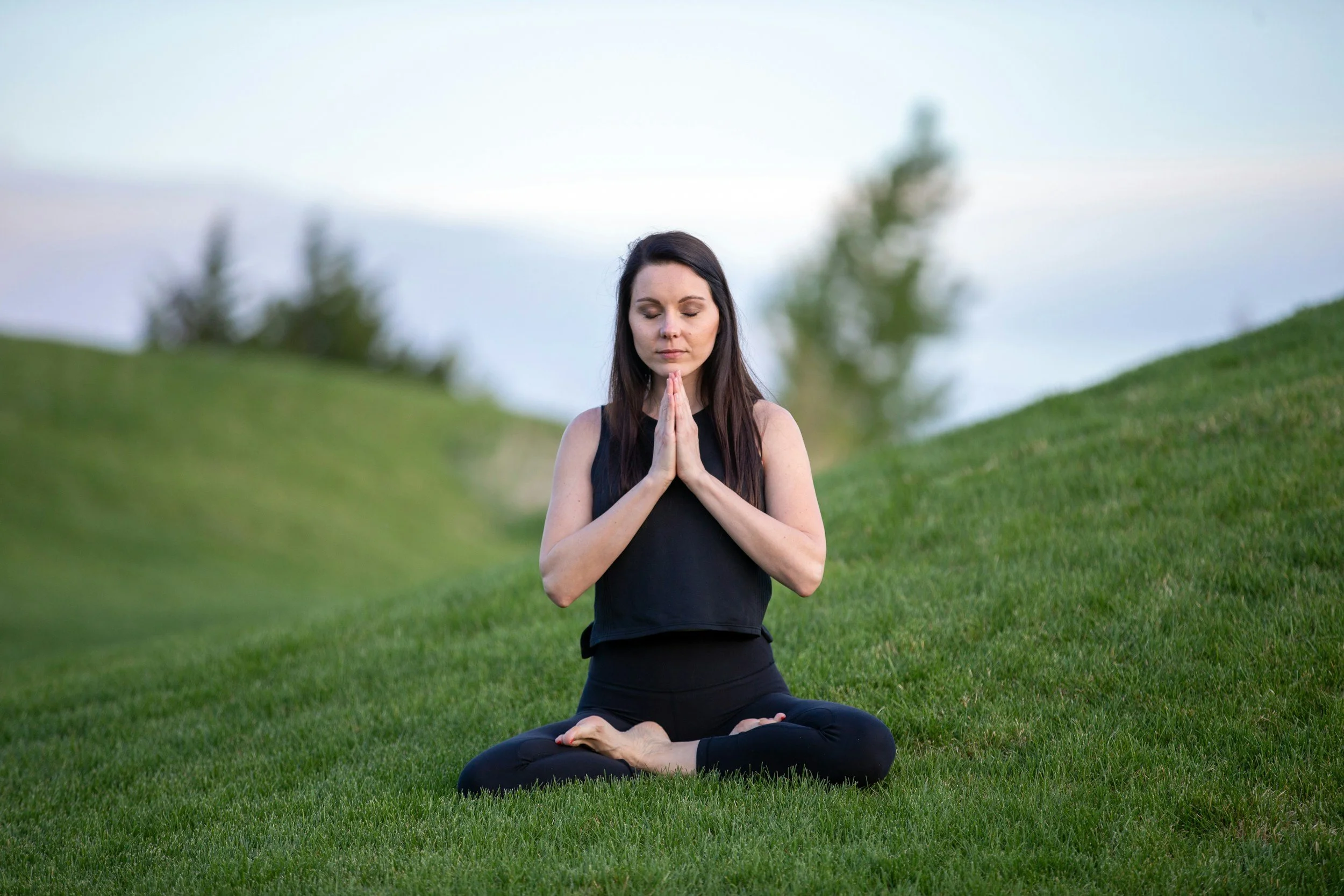
How yoga supports nervous system regulation
Yoga is increasingly supported by research as a tool for nervous system balance.
Studies show that regular yoga practice can help:
Reduce cortisol levels
Improve heart rate variability (a marker of stress resilience)
Decrease perceived stress and anxiety
Improve sleep quality
Support emotional regulation
This is not because yoga “fixes” the body.
It works because it combines multiple regulatory inputs:
Slow movement signals safety through the body
Breath awareness directly influences the autonomic nervous system
Mindful attention interrupts stress looping in the brain
Rest-based postures activate parasympathetic response
In other words, yoga creates the conditions for the nervous system to shift back into balance.
Why this matters during menopause
During perimenopause and menopause, hormonal fluctuations can increase sensitivity to stress.
Research shows that changes in oestrogen and progesterone can influence:
Sleep quality
Temperature regulation
Mood stability
Stress reactivity
At the same time, cortisol patterns can become more reactive, making everyday stress feel amplified.
This is where gentle, nervous-system-focused movement becomes especially supportive.
Not intense effort.
Not pushing.
But steady, calming regulation.

Why practice at Citta Flow
At Citta Flow, yoga is not treated as performance or flexibility training.
It is a space to:
Slow down safely
Release physical and mental tension
Reconnect with your breath and body
Support your nervous system in real, sustainable ways
Classes are small, supportive, and accessible—especially for people who feel stiff, overwhelmed, or disconnected from their body.
There is no expectation to “get it right.”
Instead, the focus is on helping your system settle.
Over time, this allows your body to remember something important:
You can come back to balance.
A gentle place to begin: the 4 Week Reset
If you’ve been feeling wired, tired, or out of sync with yourself, the 4 Week Reset is designed as a simple entry point.
Across four weeks, you’ll be guided through:
Gentle movement to reduce tension
Breath practices to bring more calm to the nervous system
Rest that supports real recovery
A slower pace that allows the body to settle
It is not about doing more.
It is about doing less—intentionally.
Ready to begin?
If this resonates and you feel ready to support your nervous system in a steady, grounded way, you are warmly invited to join the 4 Week Reset at Citta Flow. Click here for full details »
