
How yoga can help with lower back pain
If you experience lower back pain, you're certainly not alone.
Low back pain is the leading cause of disability worldwide and affects hundreds of millions of people each year. The good news is that around 90% of cases are classified as "non-specific low back pain," meaning there is no serious underlying disease or major structural problem causing the symptoms. In many cases, movement, exercise, lifestyle factors, stress, and muscle conditioning all play an important role in how the back feels.
This is where yoga can be incredibly valuable.
While yoga is not a replacement for medical care, an appropriately designed practice can help improve movement, build strength, reduce tension, and support overall wellbeing.
Why Is Lower Back Pain So Common?
The lower back, known as the lumbar spine, consists of five large vertebrae (L1-L5) that support much of the body's weight.
Between these vertebrae sit intervertebral discs, which act as shock absorbers and help distribute forces through the spine. The spine is also supported by a complex system of muscles, ligaments, tendons, and joints that work together to create both stability and movement.
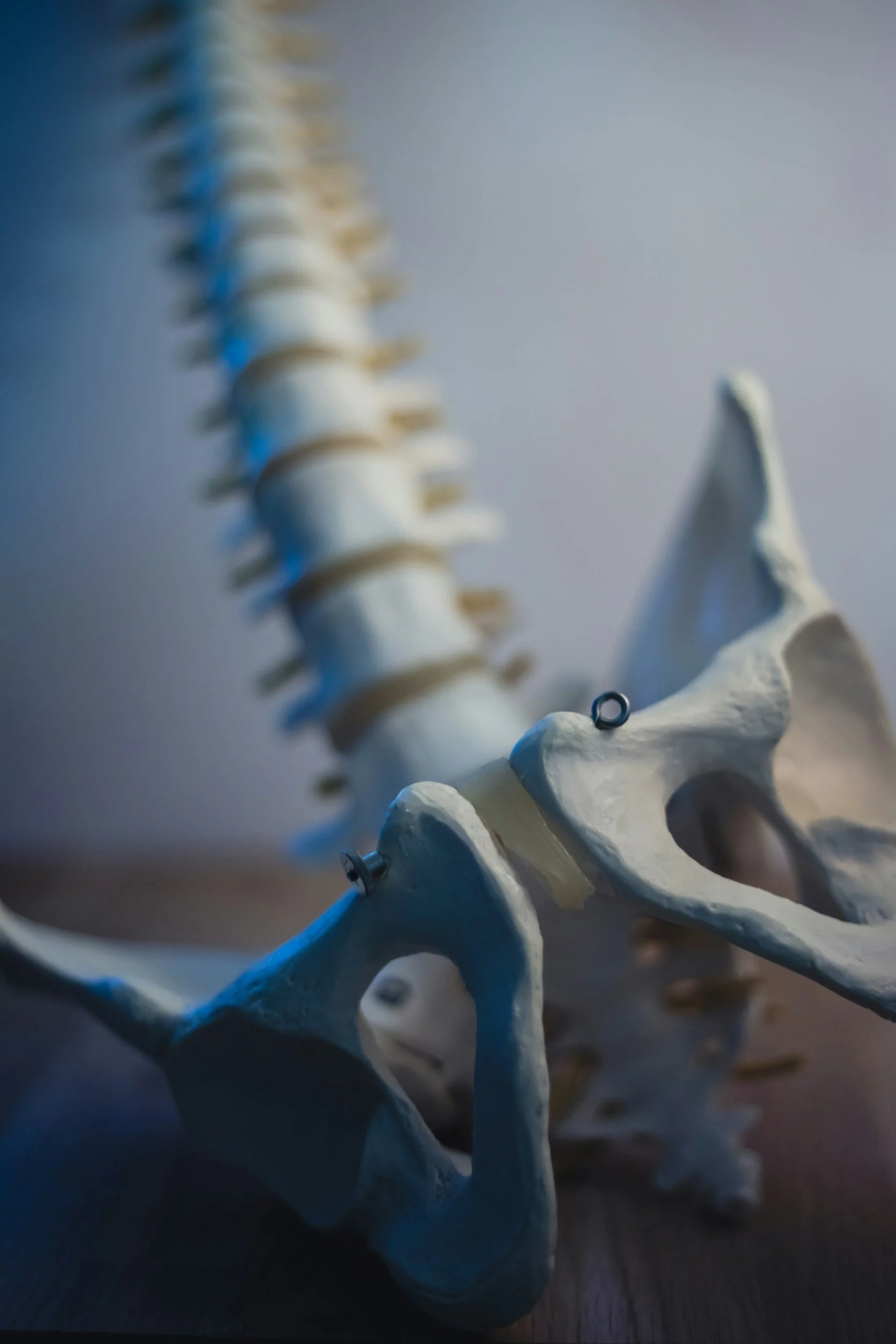
Every time you bend, twist, lift, walk, or carry something, your lower back is involved.
Because the lumbar spine plays such a significant role in daily life, it is also one of the areas most likely to become painful or irritated.
The Modern Lifestyle Problem
Many of us spend hours each day sitting at desks, driving, looking at screens, or remaining in the same position for extended periods.
The human body was designed for movement, yet modern life often encourages the opposite.
When movement decreases, muscles that help support the spine can become less conditioned. Joints may become stiff. Tissues that thrive on regular movement can become less adaptable.
This doesn't necessarily mean damage has occurred.
Often, it simply means the body has become less tolerant of the demands being placed upon it.
Over time, activities that should feel easy—gardening, carrying groceries, lifting a grandchild, or even getting out of a chair—can start to feel more challenging.
Back Pain Isn't Always About Damage
One of the most important things to understand about lower back pain is that pain does not always equal injury.
Many people are surprised to learn that findings such as disc bulges, age-related changes, and mild arthritis are commonly seen on scans, even in people who have no pain at all.
This doesn't mean these findings are irrelevant. It means the picture is often more complex than simply finding one structure to blame.
Stress, sleep quality, movement habits, strength, fitness levels, previous injuries, and nervous system sensitivity can all influence how much pain a person experiences.
This is one reason why effective management often requires a holistic approach.
Why Stretching Alone Often Isn't Enough
When your back feels tight, the natural instinct is often to stretch it.
And stretching can feel wonderful.
However, many people find that the relief is temporary.
A growing body of evidence suggests that exercise and movement are among the most effective non-surgical approaches for persistent low back pain. The goal is not simply to increase flexibility but to improve the spine's ability to move, adapt, and feel supported.
Think of it this way:
A bridge doesn't become stronger by making the cables longer.
It becomes stronger when the support structures are functioning well together.
The same principle applies to the body.
When the muscles surrounding the spine are strong, responsive, and coordinated, they help distribute load more effectively and reduce unnecessary strain.
Breathing well is also a key component in a holistic approach to healing lower back pain.
What Yoga Can Offer
A well-designed yoga practice can address several factors associated with lower back discomfort:
Gentle movement to reduce stiffness
Improved awareness of posture and movement habits
Strengthening of the muscles that support the spine
Improved breathing patterns
Stress reduction and nervous system regulation
Greater confidence in movement
Research consistently shows that movement-based approaches can play an important role in helping people manage persistent low back pain.
Importantly, yoga is not about forcing your body into deep stretches or advanced poses.
In many cases, the most beneficial practices are the simplest.
Small, mindful movements performed consistently over time often create more lasting results than occasional intense efforts.
The Missing Piece: Stability
Many people focus on flexibility when their back hurts.
What is often missing is stability.
The lumbar spine is designed to be supported by surrounding muscles, including the deep abdominal muscles, spinal stabilisers, hips, and gluteal muscles.
When these muscles work well together, movement feels easier and the spine is better supported.
This is why many therapeutic yoga programs focus not only on mobility, but also on developing gentle strength and endurance.
The goal isn't to create a stronger "back."
The goal is to create a stable body, breath and mind that supports the back more effectively.
“Stretching to relieve back pain can give short term relief but strengthening will give long term relief and perhaps even healing. It might feel good to round the back into a forward bend to “stretch it out, however overstretching can weaken the muscles and ligaments further, leading to more pain and instability.”
Imagine How Different Your Day Could Feel
Imagine getting out of bed without that familiar stiffness.
Imagine walking, gardening, travelling, or playing with grandchildren with greater ease.
Imagine feeling confident that movement is helping your back rather than making it worse.
For many people, relief doesn't come from finding the perfect stretch.
It comes from learning how to move, strengthen, breathe, and relax in a way that supports the body's natural design.
Free 40-Minute Yoga Class for Lower Back Pain Relief
If your lower back feels stiff, tight, tired, or uncomfortable, I've created a free 40-minute yoga practice to help.
This gentle class is designed to:
Improve spinal mobility
Build supportive strength around the lower back, and core
Reduce feelings of stiffness
Help you move with greater comfort and confidence
By the end of the practice, many students notice they feel lighter, more spacious through the lower back, and more at ease in their bodies.
Enter your email below and I'll send the class directly to your inbox.
Need More Personalised Support?
If you'd like guidance on which type of yoga class would help your individual circumstances, you're welcome to reach out to Bronika, Studio Owner by email hello@cittaflow.com.au
Whether through regular yoga classes at Citta Flow or a one-to-one Yoga Therapy session, there are often simple, practical steps that can help you move with greater ease and confidence.
Sometimes the path towards less pain begins with learning how to support your body differently.
